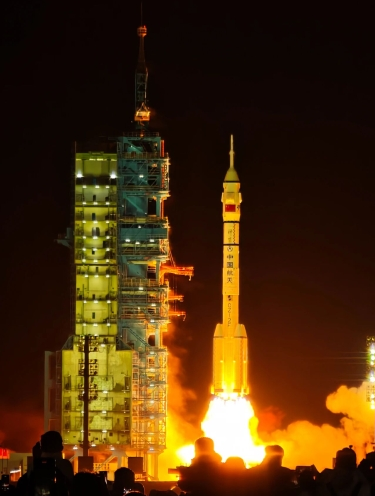
In the early morning of October 31, 2025, on the Gobi Desert of the Jiuquan Satellite Launch Center, the Long March - 2F Yao - 21 carrier rocket soared into the sky with a roar, carrying the Shenzhou - 21 Manned Spacecraft straight towards the firmament. Approximately ten minutes later, the spacecraft successfully entered its predetermined orbit, and its solar panels deployed normally, marking the complete success of the launch mission. This is the seventh crew rotation welcomed by the Tiangong Space Station and also the tenth consecutive successful manned launch of China's Manned Space Engineering Program. The entire process from ignition and liftoff to docking with the space station proceeded with pinpoint precision like a sophisticated clock.
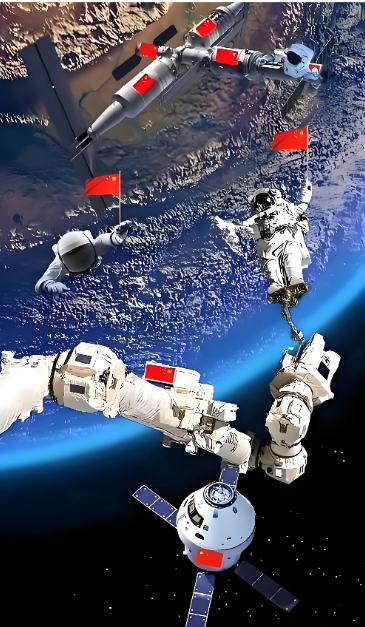
China will organize and implement four space flight missions next year, including Tianzhou - 10, Shenzhou - 22, Shenzhou - 23, and Mengzhou - 1. Among them, the Mengzhou - 1 manned spacecraft and the Long March - 10A carrier rocket used for its launch are both making their maiden flights.
China's display industry output value reached 740 billion RMB in 2024, with a growth rate of 12%. Its global market share exceeded 49%, meaning nearly half of the world's displays are closely linked to Chinese manufacturing. In the key panel and core material markets, China's share reached 55% and 43% respectively, both ranking first globally.

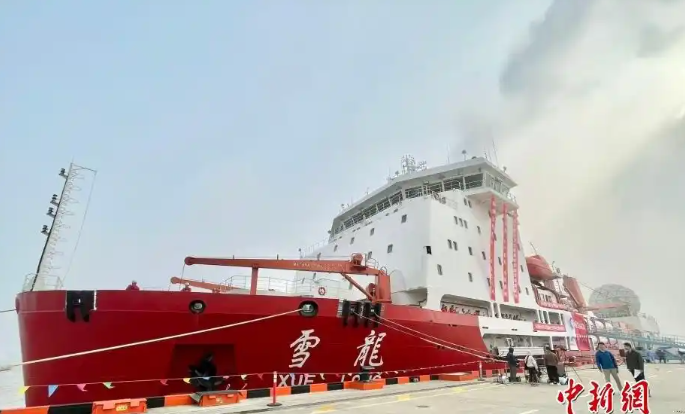
On November 1st, China's 42nd Antarctic Expedition departed for Antarctica. The expedition is jointly supported by two ships, the "Xuelong" and "Xuelong 2", with more than 500 team members from over 80 domestic institutions participating. Researchers from more than ten countries and regions, including Thailand, Chile, Portugal, as well as China's Hong Kong and Macao, are also invited to join. The expedition is expected to return to China in May 2026 after completing its tasks.
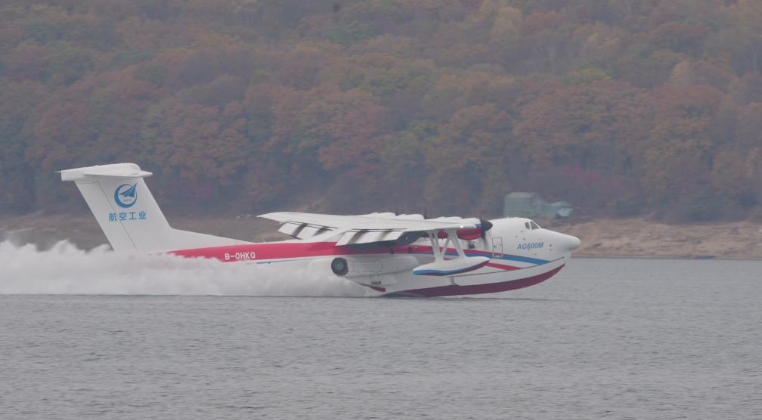
The AG600 "Kunlong", a large amphibious aircraft fully independently developed by China, has completed its first water scooping and dropping drill in a wild environment on the waters of Songhua Lake in Jilin Province. During this drill, the AG600 aircraft flew approximately 190 kilometers to reach the waters of Songhua Lake and quickly entered the operational state to finish the water scooping and dropping drill. The AG600 aircraft has two typical missions: water scooping and dropping, and water filling and dropping. After being filled with 12 tons of water at the airport and flying to the destination for dropping, it can conduct continuous water scooping and dropping 9 more times, with a total water dropping volume of 120 tons. The area where the water dropping coverage reaches the heavy rain level or above exceeds 40,000 square meters.